The Legacy of Bob White Oranges: A Forgotten Packing House in DeLeon Springs
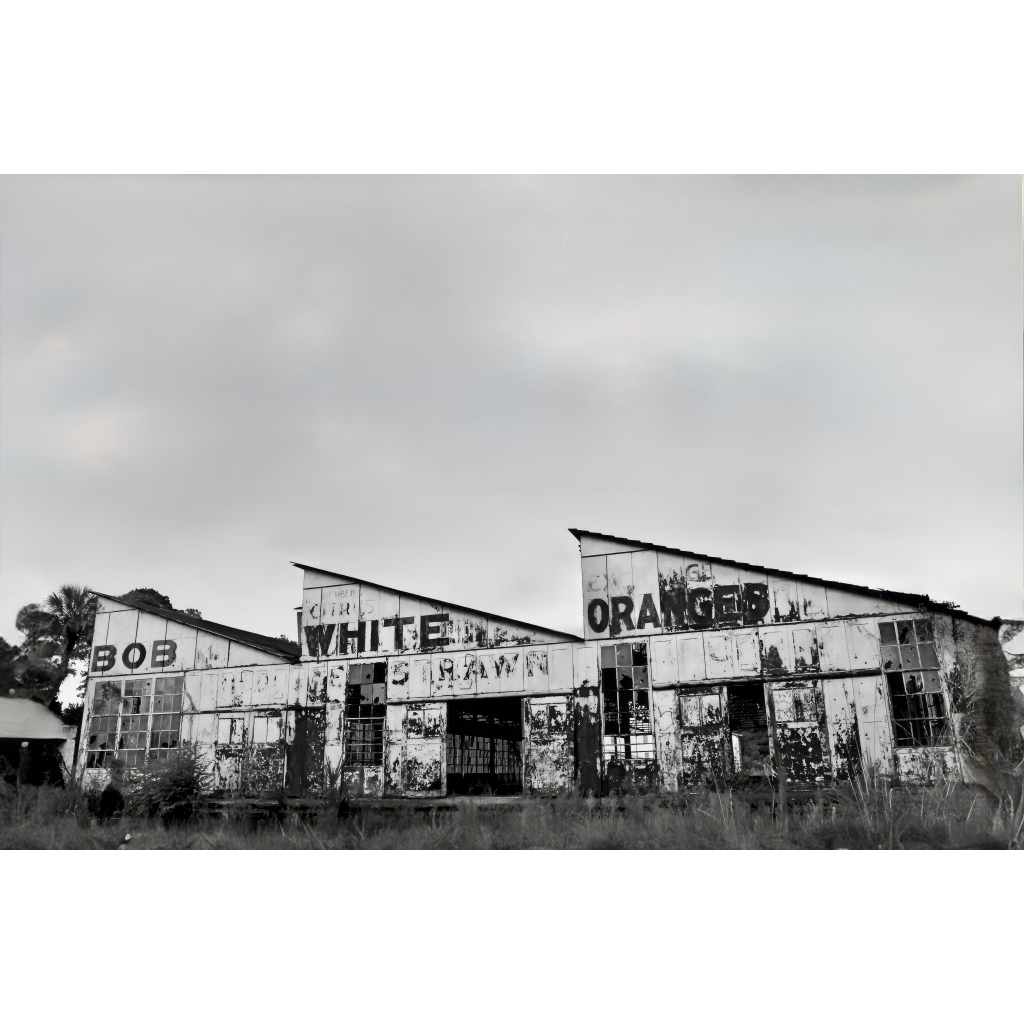
Tucked away along a quiet stretch of road in DeLeon Springs, the remains of an old citrus packing house stand as a fading monument to Florida’s golden age of oranges. Weathered steel beams, a skeletal roofline, and creeping vines now define the site but a century ago, this was the beating heart of a thriving citrus empire known for its “Bob White” oranges.
The Birth of a Citrus Brand
The story begins in the late 1800s, when the Strawn family arrived in Central Florida and began cultivating orange groves. By the early 1900s, Theodore Strawn had transformed those groves into a successful citrus operation, eventually creating the now-forgotten “Bob White” brand, named after the northern bobwhite quail common in the area.
What set “Bob White” oranges apart wasn’t just the name, it was quality. Only the best fruit earned the label, while lesser grades were sold locally. At its peak, the brand reached markets across the United States and even overseas, with shipments traveling as far as England.
The Rise of the Packing House
Before modern logistics, citrus had to be carefully handled, sorted, and packed for long-distance travel. That’s where the packing house came in.
Strawn’s early operations began humbly, packing oranges in a tent near the railroad. But by 1912, he had constructed a wooden packing house, and by 1921, after a devastating fire destroyed it, he rebuilt something far more ambitious: a “fireproof” structure made of concrete and metal.
This new facility became the centerpiece of what is now known as the
Strawn Historic Citrus Packing House District. Inside, the process was advanced for its time:
Oranges were washed, scrubbed, and dried using mechanical systems
Conveyor belts carried fruit through grading and sorting stations
Each orange was sometimes wrapped in tissue and stamped with its brand
Crates were loaded directly onto railcars bound for northern markets
The operation was efficient, innovative, and built for scale, spanning roughly 20 acres with support buildings like barns, blacksmith shops, and machinery houses.
A Hub of Industry and Community
At its height, the packing house wasn’t just a workplace, it was a hub of activity. Workers specialized in everything from grading fruit to maintaining equipment, and the surrounding groves supplied thousands of boxes of oranges each year.
Railroads played a crucial role, connecting rural Volusia County to distant markets. Crates labeled “Bob White” became a symbol of Florida citrus quality, traveling north to cities where fresh oranges were considered a luxury.
The Sudden Decline
Like much of Florida’s citrus industry, the success of the Bob White brand was vulnerable to nature. In December 1983, a severe freeze devastated the region, killing orange trees down to their roots. The groves never recovered, and the packing house, once full of life, shut its doors for good. What followed was decades of abandonment. Fires, vandalism, and time itself stripped the buildings down to their bones.
What Remains Today
Today, the packing house stands in quiet decay, its iconic sawtooth roof partially collapsed, its machinery long gone. Yet even in ruin, it tells a powerful story. Designated a historic district in 1993, the site remains one of the few surviving examples of early 20th-century citrus infrastructure in the region.
Further Reading:


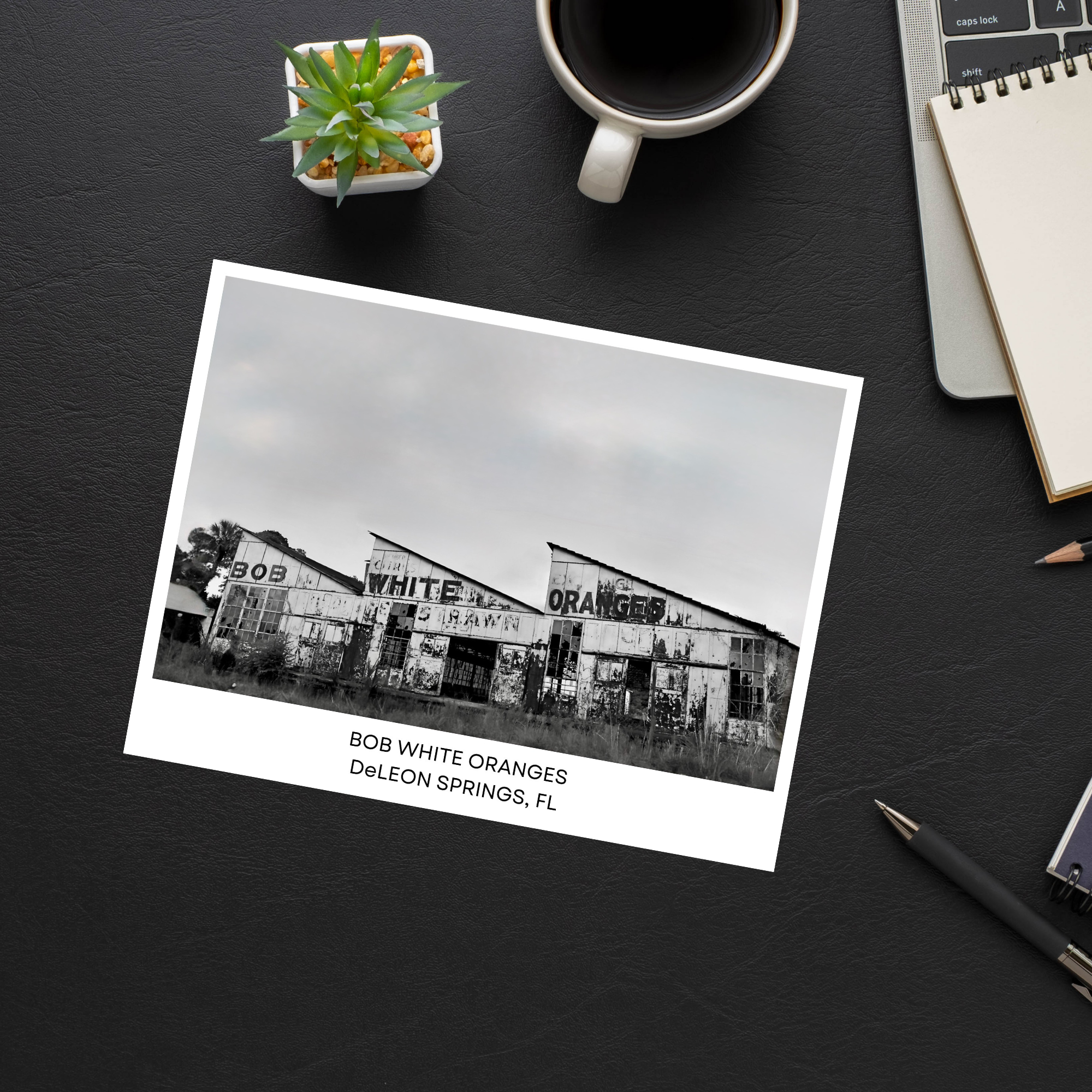
Pack of 4 Postcards
Postcard 5.5" x 4.2"
Optional Postcard Stamp
Postcards are printed double sided on linen stock and feature a unique, woven surface that you can both see and feel. Linen paper is uncoated and has a matte finish that is very easy to write on.